Africa’s micro-drama race is on. Who will own the stories and the audience?
AFRIFF and Lebara Play are developing a production pipeline, Storyshort Afrique is proposing mobile-money access, and Orange is giving ReelShort a telecom distribution route. The question is whether African creators will build lasting businesses around the format.
For decades, African film companies have faced a familiar commercial problem: finding reliable ways to get their work in front of paying audiences. A new screen format is attracting attention precisely because it appears to shorten that journey. Micro-dramas are scripted, phone-first series, often filmed vertically, with episodes of one or two minutes. They move quickly, use recurring cliffhangers and invite viewers to unlock the next instalment. What looks like a storytelling trend is also an experiment in financing, distribution and payment infrastructure.
In 2026, developments across several African markets have made the experiment more concrete. The Africa International Film Festival’s content market offered emerging filmmakers a route to micro-drama co-production with Lebara Play. Storyshort Afrique announced plans for a Francophone offering built around mobile money and lightweight streaming. Orange Middle East and Africa reached a distribution agreement to bring ReelShort to Max it TV. Nigerian companies, including EbonyLife and ToriBOX, have begun testing the format from the production and platform sides.
These initiatives are not interchangeable. One commissions shows, another proposes a way for consumers to pay, a third brings an international catalogue into existing telecom channels, and independent producers still need to own or license the underlying intellectual property. Taken together, they show why short serials are becoming part of the business of African screen entertainment.
A global business, but not yet an African market forecast
The figures behind the excitement are substantial. Research company Omdia estimates global micro-drama revenue at $11 billion in 2025 and forecasts $14 billion in 2026. Much of that business is concentrated in China and the United States. Omdia also found that, in US mobile usage data for the final quarter of 2025, ReelShort users spent an average 35.7 minutes a day on the app, compared with 24.8 minutes on Netflix’s mobile app. The comparison concerns time spent per user in those specific apps; it does not mean ReelShort has Netflix’s audience scale.
Global numbers cannot be used as estimates of Africa’s micro-drama revenue. Reliable continent-wide data on paying viewers, retention and spending are not yet publicly available. The real evidence of an African market will come from how many viewers complete a series, how many pay, and whether producers and platforms can recover their costs after promotion, billing and distribution fees.
How the short serial makes money
The classic international micro-drama model offers a few episodes free and places later episodes behind paid coin unlocks. Some services combine this with subscriptions or advertising. Short episodes create repeated opportunities to convert a viewer into a customer; they also create repeated opportunities for a viewer to leave. The financial value of a series therefore depends on what happens between the first free episode and the final paid one.
The gross amount spent by users is not a producer’s income. A platform may deduct payment processing, app-store or mobile-money charges, advertising acquisition costs, localisation, customer support and its own distribution share. A producer working for a commissioning fee faces a different equation: the series may be financed upfront, but the contract can transfer valuable sequel, remake or international rights. Lower shooting costs cannot compensate for terms that leave the production company with little continuing value.
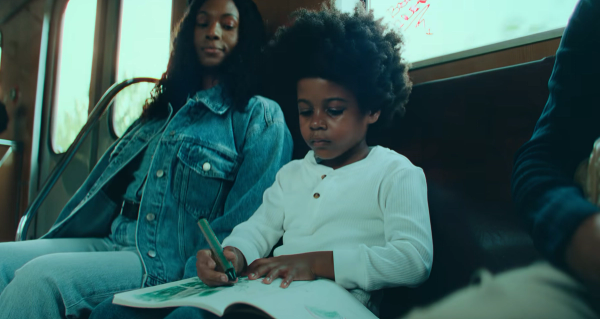
This is why vertical drama needs a different production discipline from simply cutting a feature film into short clips. The writer has to construct character, exposition and suspense within a very small time window. Directors work in a 9:16 frame, often foregrounding faces and close interaction. Production teams need consistent performances, locations and continuity across dozens of episodes, while post-production has to support rapid delivery, subtitling and marketing edits. An efficient production line can create more work for crews, but only if quality keeps viewers returning.
AFRIFF brings micro-drama commissioning into the film market
The clearest November signal came from Lagos. AFRIFF’s 15th edition ran from 1 to 7 November 2026, while the Africa Film and Content Market (AFCM) brought producers, buyers and investors together from 2 to 5 November. Within that business programme, AFCM and Lebara Play advertised a Micro-Dramas Pitch Competition, with a live pitch scheduled for 5 November at Twinwaters, Lekki.
The terms were unusually specific: five selected projects, each developed as a 50-episode vertical series, with a co-production budget to be covered by Lebara Play. Applicants had to submit a pitch video under three minutes in a vertical format and demonstrate the kind of narrative suspense that can sustain successive episodes. The jury listing included Shank Comics, Toluwani George, Ryonne B. Razaq, Issa Sissoko and Ejiro Onokpasah, Lebara Play’s head of partnerships and innovation.
That is an important shift in how the format is being presented to professionals. The event was not simply a panel about a future opportunity; it set out a route from an idea to a possible commissioned slate. Five 50-episode projects would represent 250 planned episodes if all were contracted and delivered. The published competition page does not establish that 250 episodes have been produced, nor does it name publicly verified final winners, contract values or release dates. Those outcomes remain to be documented.
The questions for applicants are commercial as much as creative. Does Lebara pay a production fee or invest in the show as a co-owner? Who controls characters and sequels? Are there exclusive distribution windows, and for which territories? Can a producer sell dubbed versions to another market? Is a revenue share attached to performance, and are there minimum guarantees? A pitch opportunity becomes a sustainable production model only when those questions have workable answers.
AFRIFF’s wider short-film ecosystem matters, too
The micro-drama pitch sat alongside a festival with an established short-film programme. At the 2026 Globe Awards, Kaelo Iyizoba’s The Spectacular Death of Prisca won Best Short Film and the Pulse Award for Emerging Filmmaker, according to post-festival coverage. An award-winning short film and a 50-episode vertical serial are not the same format: the former is often a self-contained work built for festivals and screenings; the latter is designed for recurring mobile viewing and serial monetisation.
The connection is the talent pipeline. Filmmakers, actors, editors and writers who have worked in shorts can bring technical and storytelling skills into a vertical-drama production market. Equally, a successful micro-drama team may develop characters or audience knowledge that can support longer-form projects. AFRIFF’s commercial relevance is that it puts different screen businesses in proximity, where introductions, co-productions and distribution discussions can happen rather than leaving short-form creators isolated from established film finance.
Lebara Play is building more than a catalogue
Lebara Play’s official studio proposition connects micro-drama with production technology. The Nigerian service promotes tools for script-to-video experimentation, visual development and AI-assisted creation, alongside the promise of reaching mobile audiences. It explicitly targets writers, filmmakers and content creators rather than only purchasers of finished shows. The studio advertises credit-based access to creative tools; those prices should not be confused with consumer subscription tariffs or the budgets promised to AFCM pitch winners.
The telecom connection is material. An operator can offer familiar payment channels, data packages, customer communication and a distribution environment that does not require each producer to build an app and payment gateway. But connectivity is not free, and neither is content. A telco-backed proposition still needs transparent arrangements around bandwidth, payment settlement, subscriber acquisition and content licensing. The advantage is access; the risk is that the party controlling access captures most of the value.
Storyshort Afrique is testing a Francophone access model
Storyshort Afrique illustrates the market from another direction. In a November 2026 public announcement, Adrien Cottinaud described a proposed web app for Francophone West and Central Africa, built around French-language vertical series of approximately one to two minutes. The proposition includes Mobile Money and prepaid credit top-ups rather than requiring a bank card, with day, week or month passes and a stated ambition to bundle extra data with purchases.
Those design choices address real differences between African markets and the countries in which many global micro-drama apps were first scaled. Daily and weekly passes can reduce the size of a purchase. Mobile-money access can widen payment options. A light web app may make entry easier for users on lower-cost devices, provided video compression, loading and data use actually perform as promised. Language, pricing and local content are not simply localisation details; they determine who can become a paying customer.
Storyshort’s existing consumer terms describe subscriptions and coins for episode access through an application operated by StudioQuinze. Those terms list card and digital-wallet payment options. They should not be treated as proof that the announced Africa-specific Mobile Money system and bundled data benefits are already available in every target market. The November announcement is best understood as an announced rollout strategy. Brief54 has not verified an active country-by-country catalogue, signed telecom partners or paying-user figures.
Storyshort Afrique and AFRIFF/Lebara Play address two complementary gaps. The first seeks a workable payment and access method for audiences in Francophone markets. The second describes a commissioning route for a repeatable supply of African-produced episodes. Both are required for a complete value chain, but neither offers enough public financial detail yet to demonstrate the model’s long-term economics.
Orange and ReelShort show the competition ahead
The other major development came in October. Orange Middle East and Africa announced a multi-year partnership with ReelShort, owned by Crazy Maple Studio, to distribute vertical series through Max it TV across 17 markets in Africa and the Middle East. Industry reporting described a first wave planned for four markets in 2026, with the remaining territories to follow. The companies had not named the initial four markets or disclosed the commercial terms in the reports reviewed.
The proposed access mechanism is particularly relevant: customers would buy a dedicated mobile-data bundle that includes access to ReelShort’s catalogue during the bundle’s validity. The offer places entertainment inside an existing operator relationship, rather than asking every viewer to discover, download and separately fund a new international app. Orange has described Max it as serving tens of millions of users, although a subscriber base is only potential reach, not proof that those customers will watch or pay for micro-dramas.
This deal could accelerate awareness of the category while making the local competitive environment tougher. International platforms bring catalogues, marketing experience and data on which genres convert viewers. African production companies therefore need more than the ability to copy a vertical format. They need distinctive stories, ownership of rights, local languages, costs matched to local spending, and partnerships that let them reach audiences without surrendering all the economics.
Nigeria’s producers and platforms are already experimenting
Early African experiments show different routes to participation. In March 2026, EbonyLife announced Love Me Twice, a vertical production directed by Kayode Kasum for its EbonyLife ON Plus proposition, as reported in industry coverage. That places an established production brand inside a format usually associated with dedicated mobile apps. It also shows how existing talent and production infrastructure can be adapted to shorter, faster storytelling.
ToriBOX, founded by David Effiong, has presented a different model: a dedicated Nigerian platform for vertical series. The company said its web service launched in May 2026 and promoted its original production The Silent Oath, with free discovery and paid viewing. These are company-reported milestones, not independently audited viewing or revenue figures. Their importance lies in the attempt to build an African-owned distributor instead of relying entirely on global platforms to license finished content.
These experiments point to the relationship between production and distribution. A broadcaster or established studio can finance shows but may not own a specialised mobile audience. A start-up app can create the interface but still needs a steady slate and inexpensive ways to acquire users. A telecom operator can offer billing and reach, but may have limited original content of its own. Partnerships can close those gaps; their commercial terms determine whether value stays with African creative businesses.
Ownership, production finance and recurring earnings
There are at least three ways a production company might enter this market. It can accept a fixed commission and deliver episodes to a platform; it can co-produce, sharing cost and rights; or it can finance its own intellectual property and license distribution by territory or window. None is always best. A fixed fee offers certainty but can limit upside. Co-production spreads risk but complicates accounting and control. Ownership preserves flexibility but requires capital, marketing and the patience to wait for income.
The contract should specify who owns the script, characters, adaptation rights and underlying footage; whether actors and composers receive residuals; when the platform must account for earnings; how deductions are calculated; and what happens when a show is dubbed, remade or moved to a different platform. Micro-dramas may have short episodes, but their long-term value can rest in a character or universe that audiences return to across seasons and formats.
The economics of customer acquisition also matter. A compelling promotional cut may bring large numbers of viewers to a first episode, but advertising spend can overwhelm later episode purchases. A credible business case requires retention by episode, average spend per paying viewer, customer-acquisition costs, payment success rates, rights costs and actual creator payouts—not just downloads, impressions or total video views.
A distribution lesson that runs across African film
The emerging micro-drama market also echoes a broader finding from Dalberg’s 2026 study, Made in Africa, Watched Globally?, commissioned by GIZ and Afreximbank/CANEX. Across six African markets, the research finds that production growth has not been matched by equivalent investment in distribution, audience data, affordability and monetisation. A phone-native format may reduce the need for cinema screens, but it does not automatically solve those business problems. They reappear as mobile data costs, platform discovery, billing, localisation and rights agreements.
The difference is the possibility of designing payment and distribution into the format at the beginning. AFRIFF’s co-production programme, Storyshort Afrique’s announced Mobile Money passes, Lebara Play’s creative technology and Orange’s ReelShort bundles are all attempts to do that from different positions in the value chain. Whether African producers gain negotiating power will depend on the number of viable buyers and the ability to keep and monetise rights beyond the first commission.
Micro-dramas are unlikely to replace cinemas or long-form television. Their more immediate significance is the possibility of a new production window: frequent, locally relevant screen stories paid for in ways that reflect how viewers actually use their phones. The industry’s next evidence will not be another global revenue forecast, but the first fully financed slates, their terms of ownership, their audiences and the revenue that returns to African creators.
Sources :
Omdia, ‘Microdramas overtake streamers on mobile engagement’, 23 February 2026
AFCM 2026 / Lebara Play, official Micro-Dramas Pitch Competition
Nollywood Reporter, ‘AFCM Launches Micro Drama Pitch Competition with Lebara Play’, 29 October 2026
AFRIFF, official festival and Africa Film & Content Market dates
Afrocritik, AFRIFF 2026 Globe Awards winners
Lebara Nigeria, Lebara Play Studio
Adrien Cottinaud, Storyshort Afrique announcement, November 2026
Storyshort, terms of sale, updated October 2026
Television Asia Plus, Orange/OMEA × ReelShort partnership, 21 October 2026
Broadcast Media Africa, Orange × ReelShort, 21 October 2026
Communiqué, ‘The economics of a microdrama’, 28 April 2026
ToriBOX, company account of its launch, July 2026
GIZ/Afreximbank/CANEX/Dalberg, Made in Africa, Watched Globally? (2026)