Coca-Cola returns to AFCON
The beverage group’s return after almost three decades comes as Africa’s flagship football competition attracts more sponsors, bigger audiences and a broader range of commercial rights.
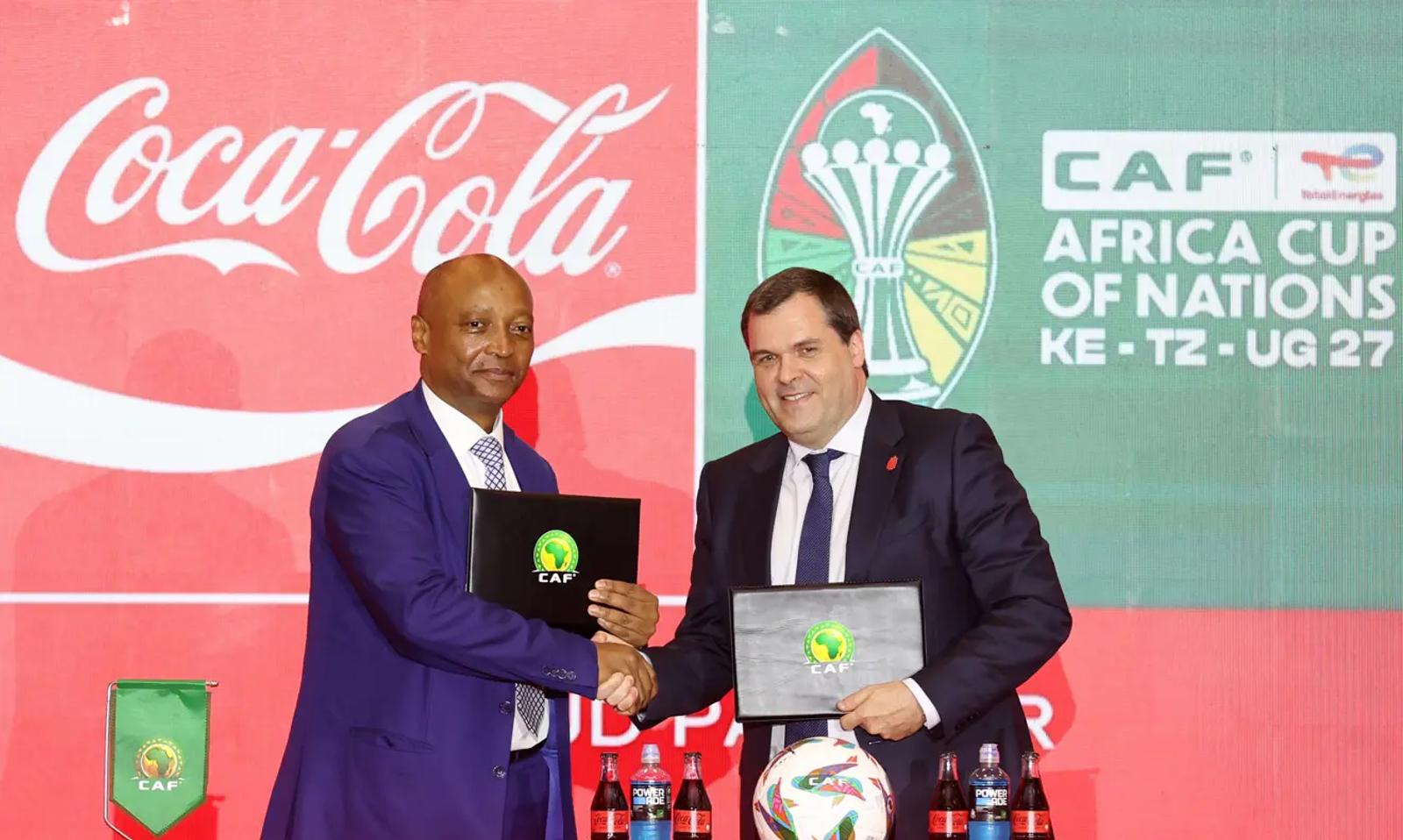
Coca-Cola has been named an Official Competition Sponsor of the 2027 and 2028 Africa Cup of Nations. The agreement was signed in Johannesburg on 23 November by CAF President Patrice Motsepe and Luis Felipe Avellar, President of Coca-Cola’s Africa Operating Unit. The company’s previous involvement includes the 1996 tournament in South Africa and 1998 in Burkina Faso.
The 2027 competition will be staged in Kenya, Tanzania and Uganda. Coca-Cola’s announcement places supporters, music and local cultural expression at the centre of its planned association with African football. Financial terms, specific rights and the activation budget have not been disclosed. TotalEnergies remains the title sponsor of the 2027 tournament.
A sporting property with growing commercial weight
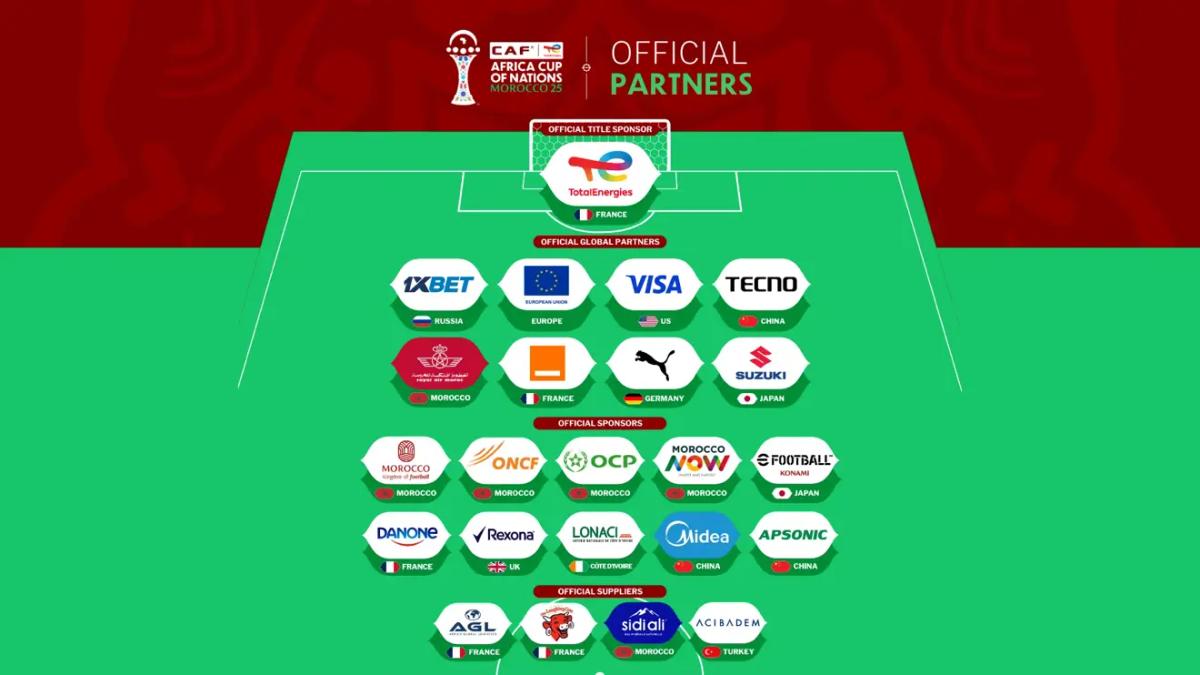
The company is returning to a substantially different competition. CAF says the Morocco 2025 edition, played across December 2025 and January 2026, reached a cumulative television audience of more than 3.2 billion and generated 6.1 billion digital views. These are aggregate figures, not counts of individual people. CAF subsequently reported a 95% increase in commercial revenues and a record 23 sponsorship partners.
The sponsor portfolio grew from nine partners at Cameroon 2021 to 17 at Côte d’Ivoire 2023 and 23 at Morocco 2025. CAF identifies TotalEnergies, Orange, Lonaci, 1xBet, Visa, Tecno and Puma as continuing partners, with AGL, Danone and Unilever also renewing. Coca-Cola is a returning sponsor after a much longer absence, not simply another renewal. The distinction matters: continued investment by established partners signals sustained demand for the property, while new and returning advertisers broaden the market for its rights.
CAF and the local organising committees held a commercial roadshow in the three 2027 host markets in October. It presented the competition to potential partners as a cross-border commercial platform, not simply a series of matches.
CAF’s latest financial results, announced on 21 November 2026, give the growth a monetary dimension. Reuters reported that the confederation recorded $284 million in total revenue and a $31.2 million net surplus for 2025/26. Morocco 2025 generated more than $100 million for CAF, supported by its record commercial partner roster. These are rights-holder results, not evidence of the return earned by each individual sponsor.
Sponsorship, ambassadors and owned intellectual property
Brands have several ways to establish an association with sport and culture. An athlete ambassador offers a recognisable personality and a comparatively focused audience. A brand-owned character, event or entertainment format gives its creator greater control over the underlying intellectual property and the possibility of developing it across multiple seasons. The investment is in creating and sustaining an audience rather than buying access to an existing one.
Sponsoring an established competition is a different commitment. Major rights packages can rank among the largest investments in a marketing portfolio, particularly when the fee is combined with media, production, hospitality, retail and on-the-ground activation. In exchange, a sponsor gains an authorised connection to a property with established fan attention, shared rituals and a calendar of recurring moments. Exact benefits depend on the contract.
The economics of winning a sponsorship
An audience of billions is compelling, but visibility is not the same as value. With 23 partners at the last edition, brands competed not only with one another for attention but also with players, broadcasters, creators and the tournament itself. Some sponsorships become synonymous with the competition; others deliver extensive exposure without a lasting association in consumers’ minds.
The return can take different forms: brand recognition, preference, retailer demand, new customer relationships, hospitality or measurable sales. The economics also depend on how much the sponsor invests in activating the rights, and whether it can distinguish the impact from the ordinary increase in demand during a tournament. Digital fan experiences may create opportunities to build consent-based first-party audience data. Access to CAF’s fan records or athlete data is not an automatic consequence of sponsorship and has not been announced.
For Coca-Cola, the three host markets offer a chance to connect a global brand with distinct local football cultures and retail ecosystems. The partnership runs across two editions, allowing the company to develop a platform over time rather than relying on a single tournament. The scale of AFCON is now established; Coca-Cola’s approach to making its presence distinctive is the next development to watch.
In Lagos, Coca-Cola is also associated with the forthcoming Rhythm Unplugged and Flytime Fest concerts. The two investments illustrate different routes into popular culture: football rights deliver a pan-African property, while live music offers more concentrated local experiences. Both require additional activation expenditure to make the brand visible and relevant in settings that audiences have chosen for reasons other than advertising.
Sources :
CAF, Coca-Cola sponsorship announcement, 23 Nov 2026
Coca-Cola, partnership vision, 23 Nov
CAF, Morocco commercial results, 16 Jan 2026
CAF, East Africa commercial roadshow / 95% revenue growth
Reuters, CAF’s 2025/26 financial results, 21 Nov
Voice of Nigeria, Coca-Cola Rhythm Unplugged and Flytime programme