The business of Detty December
A decade after the expression entered mainstream culture, the West African festive season has become a market for live entertainment, diaspora tourism and increasingly sophisticated cultural businesses. Lagos and Accra are now developing different ways to capture that demand.
A Lagos calendar published by What To Do In Lagos and Lagos Detty December already lists 48 events for December 2026. Concerts by Wizkid, Davido and Asake sit alongside fashion shows, workshops, food festivals, beach parties and religious gatherings. That density is a measure of how far the festive season has travelled from its roots in end-of-year homecoming and nightlife.
The commercial activity starts long before the first major concert: flights are booked, venues reserved, brands sign sponsorship agreements and producers assemble crews. The season has become a cultural export that attracts audiences to West Africa rather than sending its music and entertainment abroad.
From homecoming to a named cultural season
The expression “Detty December” draws on the colloquial use of “detty”, a playful variation of “dirty” associated with letting loose and celebrating. End-of-year homecomings, weddings and Christmas festivities were already established in Nigeria and Ghana before the expression became popular. Nigerian musician and entrepreneur Mr Eazi has claimed that he coined it in 2016; contemporary accounts trace its mainstream use to his Life is Eazi concert in Lagos. The precise first use remains disputed. His later Detty Rave events in Ghana helped spread the phrase across both markets.
The emergence of a recognisable name also created a commercial opportunity. Deola Art Alade, who built Livespot with Darey Art Alade, says the business registered Detty December in 2019 in preparation for a culture festival planned for 2020. That is a claim about registration, not proof of the first use of the expression or ownership of every event associated with the season. The distinction between a popular cultural movement and a privately operated festival remains important.
Ghana’s Year of Return in 2019 provided a different kind of impetus. The initiative, promoted by the Ghana Tourism Authority under President Nana Akufo-Addo’s administration, invited the African diaspora to reconnect with Ghana, marking four centuries since the arrival of enslaved Africans in Virginia in 1619. It combined heritage, cultural events, travel and opportunities for investment. Ghana recorded about 1.13 million international arrivals in 2019, according to the tourism ministry, and $3.31 billion in tourism receipts for the year. These are national annual figures, not revenue attributable solely to the campaign.
The subsequent Beyond the Return programme extended that relationship beyond a single commemorative year. Music and nightlife helped to make the homecoming visible to a younger audience, but the heritage proposition gave Ghana a distinctive reason to travel. December in GH now connects those cultural motivations to a recurring national tourism calendar.
Governments join the business of the festive season
On 14 September, Nigeria’s Federal Ministry of Art, Culture, Tourism and the Creative Economy unveiled MyCityApp at the Ember2Remember National Stakeholders’ Conference in Lagos. The initiative brings public authorities and private businesses into a coordinated September-to-December tourism programme, aggregating festivals, concerts and lifestyle activities in a 100-day digital calendar. Minister Hannatu Musa Musawa called on state governments, event organisers, hospitality and tourism businesses to participate. The ministry frames it within a $100 billion tourism and creative-economy opportunity, an ambition rather than a measured result.
The August launch brought together Minister Hannatu Musa Musawa, MyCityApp chief executive Ifeoma Mbonu, Nigerian Tourism Development Authority director-general Ola Awakan and representatives of MTN Nigeria and ProvidusBank. Their participation illustrates the breadth of the project: destination marketing, banking, connectivity, event discovery and visitor services. The September conference translated that coalition into a publicly launched calendar. Lagos State has separately warned visitors about fraudulent accommodation listings and event tickets.
In Ghana, Tourism, Culture and Creative Arts Minister Abla Dzifa Gomashie and Ghana Tourism Authority chief executive Maame Afua Houadjeto launched December in GH at Labadi Beach Hotel on 20 October. The programme runs from 1 December to 3 January 2027, within the broader Black Star Experience strategy. More than 150 events were registered nationwide, with over 100 in Accra, according to MyJoyOnline. The calendar incorporates music, heritage, fashion, food, theatre and community experiences, giving smaller cultural operators a route into national destination promotion.
The 2026 programme: global stars and local formats
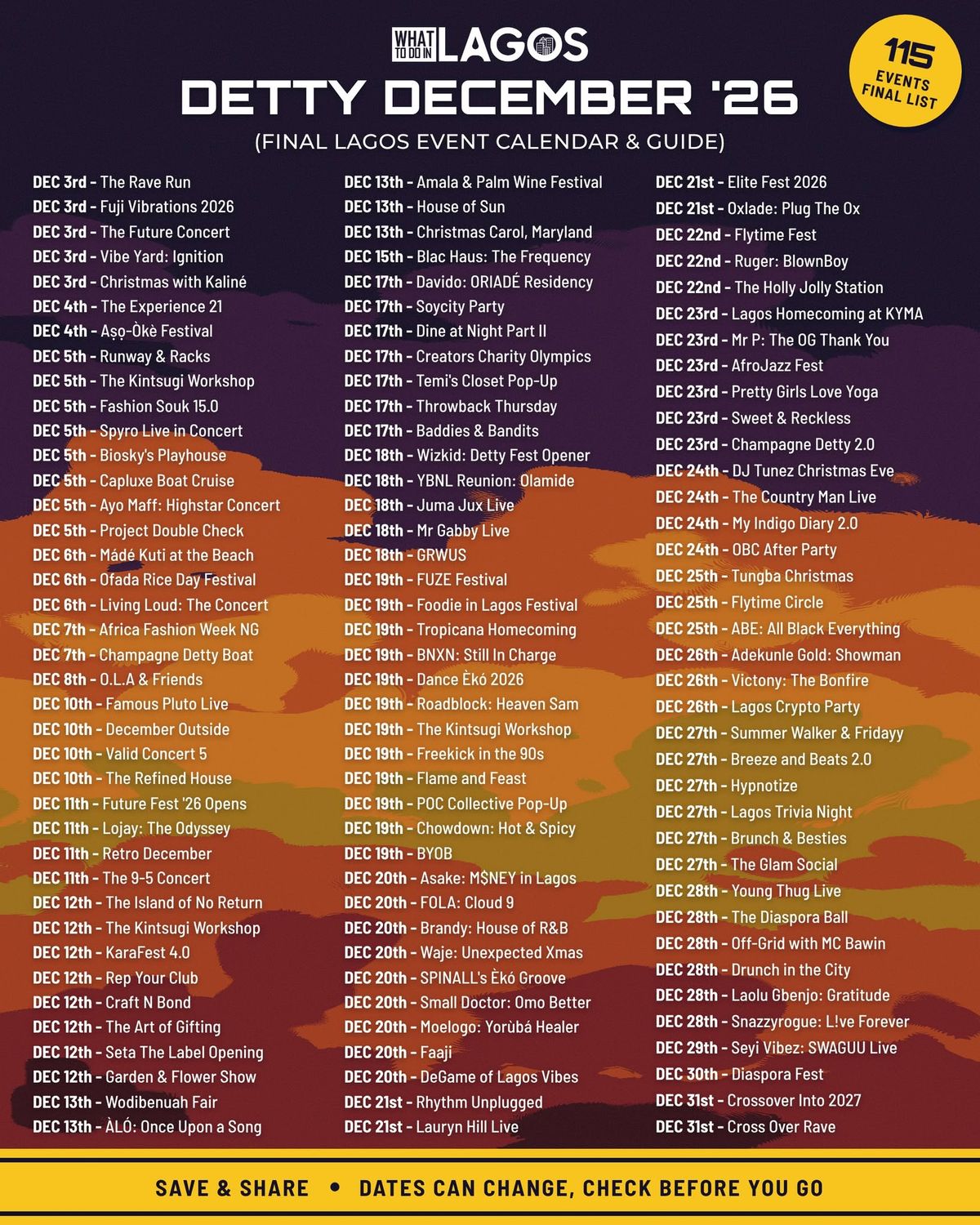
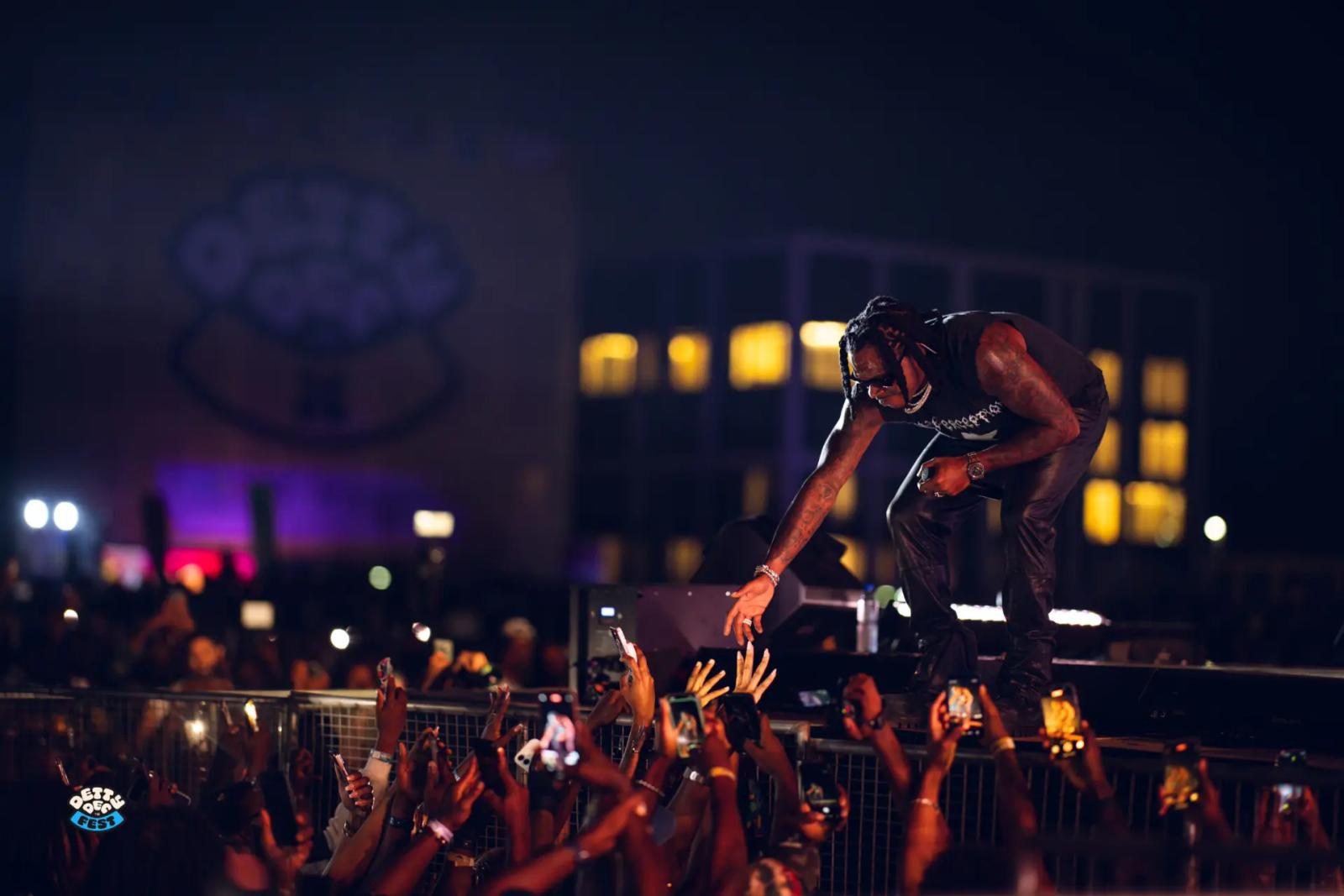
In Lagos, the largest promoters are developing distinct properties. Livespot’s Detty December Fest is scheduled for 18 to 30 December. Its programme opens with Wizkid and includes Lauryn Hill, Summer Walker with Fridayy, DJ Tunez and Young Thug. The festival combines live music with vendor spaces, food, fashion, hospitality and other experiences. Its ticketing platform, DOT Tix, and its commercial partner inventory are part of the wider operation.
Davido’s three-night ORIADÉ residency at the National Theatre (17 to 19 December) is an example of an artist-led format built around repeat performances rather than a single headline show. At Eko Convention Centre, Cecil Hammond’s Flytime Promotions brings Brandy to House of R&B on 20 December, followed by Coca-Cola Rhythm Unplugged on 21 December and Flytime Fest on 22 to 24 December. The calendar also includes Asake’s M$NEY in Lagos and Olamide’s YBNL reunion. These overlapping programmes are an indication of the breadth of demand, but also of competition for audiences, sponsors and production resources.
Announced programme :
17–19 Dec
Davido — ORIADÉ residency, National Theatre, Lagos
18 Dec
Wizkid — Detty December Fest opening, Lagos
20 Dec
Brandy — Flytime House of R&B, Lagos
21 Dec
Lauryn Hill — Detty December Fest; Lil Baby and Kehlani — Rhythm Unplugged, Lagos
22–24 Dec
Flytime Fest, Lagos
24 Dec
BHIM Festival, Accra; DJ Tunez, Lagos
27–28 Dec
Summer Walker / Fridayy; Young Thug — Detty December Fest, Lagos
24 Dec–4 Jan
Roverman Festival of Plays, Accra
There is another market beyond the headline stages. The supplied What To Do In Lagos calendar includes Africa Fashion Week Nigeria, the Amala & Palm Wine Festival, the Kintsugi Workshop, Dance Èkó and The Experience. Club nights and smaller parties take place across Victoria Island, Lekki and other districts. Established nightlife venues such as Quilox and Club DNA feature in destination guides; their individual December schedules should be checked directly. In Accra, Polo Beach Club and the new Future Club represent different kinds of visitor experiences, from beach nightlife to curated cultural programming.
A different business model is emerging in Accra
AfroFuture, formerly Afrochella, grew from a 2017 pilot into an internationally recognised music and cultural festival. Culture Management Group founder Abdul Karim Abdullah and co-founder Kenny Agyapong Jr. helped build the property around African creativity and its global diaspora. This year, the organisers have announced that they will not stage their usual El Wak Stadium festival. Instead, Future Club opens on 16 December at 1 Shiashie in Accra, with membership, live performances, podcasts and creative experiences.
The change is commercially significant. An annual festival concentrates revenue and costs into a few days; a permanent venue creates an opportunity for repeated programming, memberships, collaborations and hospitality throughout the year. It also brings fixed operating costs and the need to sustain attendance outside peak season. AfroFuture is effectively using its existing audience and intellectual property to develop a different asset, rather than relying exclusively on an annual stadium event.
The value chain beyond tickets
MO Africa Co’s study The Economics of Euphoria estimates that Lagos recorded ₦396.54 billion in consumer spending over a 55-day festive window in 2025, involving an estimated 3.6 million participants. Visitors from the diaspora accounted for 55% of expenditure; the United States overtook the United Kingdom as the largest international source market in the report. This measures a wider mid-November-to-January period, not just December, and is an estimate rather than audited business revenue.
Accommodation alone accounted for ₦175.4 billion (44.2%) and entertainment and nightlife for ₦129.55 billion (32.7%). Together these categories represent approximately three-quarters of estimated spending. Dining, retail, fashion, transport and related services share the remainder. The distribution shows why the event economy cannot be understood by looking only at concert-ticket sales: a hotel room or short-let apartment can capture spending across multiple nights and across several events.
Ghana’s official tourism statistics tell a complementary story. The country recorded 141,186 international arrivals in December 2025, compared with 126,791 a year earlier, an increase of 11.35%. For the whole of 2025, arrivals reached 1.307 million and estimated international tourism receipts totalled $4.34 billion. Annual receipts nevertheless declined by about 10.1% despite higher arrivals, demonstrating that visitor volume does not guarantee higher revenue. Licensed tourism enterprises grew from 6,702 to 7,109, with travel trade businesses expanding by 18.6%. Ghana’s figures are national tourism statistics and should not be added to the Lagos consumer-spending estimate.
The commercial model extends from ticket revenue to sponsorship, premium tables, food and beverage sales, merchandising and concessions. A festival village, for example, can earn from vendor space and hospitality alongside admission. Artists, promoters, booking agents, designers, production houses, stage builders, camera crews, security companies and ticketing platforms all participate in the value chain.
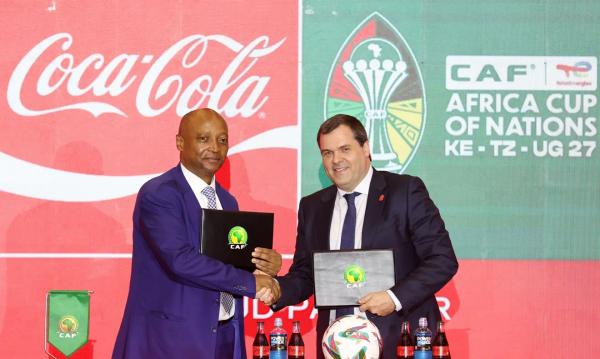
The impact also reaches aviation, hotels, short-let operators, restaurants, mobility and payments. Livespot lists Heineken as headline sponsor and offers branded zones, partner pods and hospitality. Coca-Cola’s naming association with Rhythm Unplugged and Flytime Fest is another example of a brand investing in an existing entertainment property. These deals generate income for event businesses beyond tickets, while exposing the sponsors to audiences during moments of leisure and social interaction.
The economics are not equally favourable for everyone. Upfront production costs and artist fees expose promoters to ticket-sales risk; smaller suppliers may face delays in payment, while high accommodation prices and congestion affect residents and visitors. Public infrastructure, consumer protection and reliable transport are therefore part of the business proposition, not an unrelated policy issue.
The development of these businesses is already visible in 2026: governments are aggregating experiences into national calendars, festival operators are selling multiple forms of commercial inventory, and one of Accra’s best-known promoters is moving into a permanent venue. The original attraction remains the same: the music, homecoming and social life that make people want to travel. What has changed is the scale of the businesses organised around it.
A season that increasingly behaves like an industry
For a local promoter, the season offers a concentrated sales window but also brings exposure to artist fees, exchange-rate movements and demand for the same venues and crews. For a hotel, it means occupancy and room rates; for a payment provider, transactions across thousands of merchants; for an independent fashion label, a chance to sell directly to international visitors. Governments capture a different form of value through taxes, employment and destination recognition. The figures available so far document spending and arrivals, but not the distribution of profit, wages or lasting employment across those participants.
Sources :
Nigeria Federal Ministry, 100-day tourism initiative
MyCityApp, official national calendar and partners
Punch, Lagos consumer fraud warning, 16 Nov
Ghana News Agency, 2026 calendar
MyJoyOnline, more than 150 events
Livespot, official festival programme
Livespot, artists, vendors and sponsors
Davido, artist announcement / video
Flytime, official lineup
Punch, published international line-up
Nairametrics, MO Africa 2025 study
Graphic Online, Mr Eazi’s account of the expression’s origin
Marie Claire Nigeria, tracing the phrase and 2016 flyer
Deola Art Alade, account of 2019 registration
Visit Ghana, Year of Return history
Ghana News Agency, 2019 arrivals and receipts
Federal Ministry, August launch participants and public/private coalition
Ghana News Agency, 2026 launch, leadership and tourism vision
Livespot, festival property and DOT Tix
Voice of Nigeria, Cecil Hammond and Flytime 2026
NaijaSubway, Lagos nightlife and events guide
Far From Home, Accra visitor guide
AfroFuture, official Future Club announcement
OkayAfrica, AfroFuture founders and 2025 festival
BusinessDay, MO Africa spending categories and source markets
BusinessDay, MO Africa participant and accommodation data
ATTA, December arrivals and tourism enterprises
Ghana Information Services Department, annual tourism receipts
MyJoyOnline, annual receipts decline
What To Do In Lagos, 2026 calendar published with @lagosdettydecember