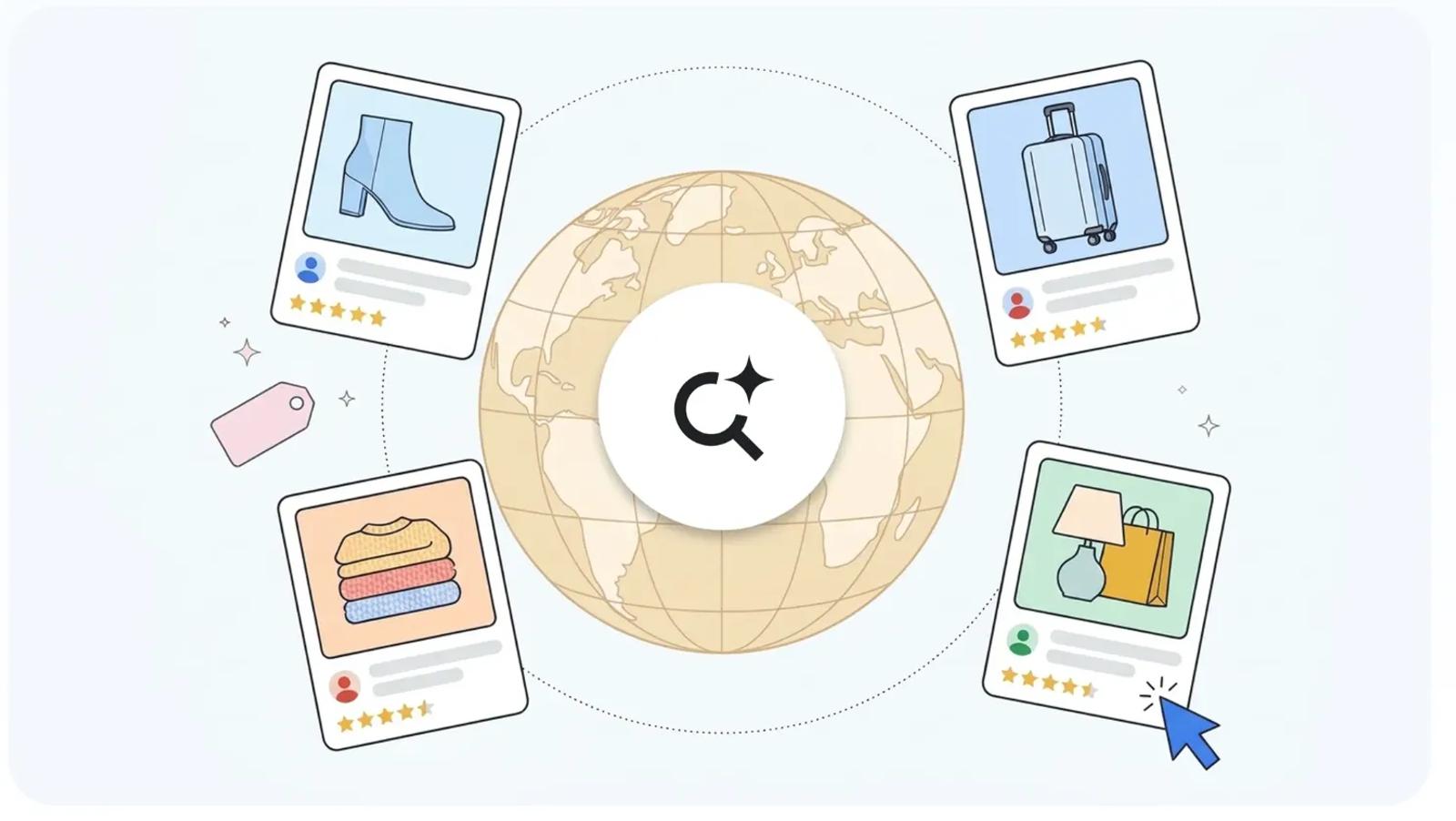
Google brings ads into AI Mode in Kenya and Nigeria
The expansion introduces a new advertising environment within conversational search and changes how existing Google campaigns can reach potential customers.
Google announced on 28 October that it was expanding advertising within AI Mode to ten additional markets, including Kenya and Nigeria. The rollout also covers Australia, Canada, India, Malaysia, New Zealand, Pakistan, the Philippines and Singapore.
AI Mode is a conversational search experience. Instead of entering a succession of short queries, a user can ask a detailed question and then refine it through follow-up questions. For example, a customer in Nairobi might search for a phone within a particular price range, then ask about battery life, local delivery or mobile-money payment options. Sponsored placements can appear alongside the information returned by Google when the system identifies relevant commercial intent.
How advertising in AI Mode works
The launch does not require advertisers to establish a separate AI Mode campaign. According to Google’s documentation, eligible existing Search, Shopping and Performance Max campaigns can serve in the new environment. Eligibility depends on market, language, campaign configuration and ad format.
Performance Max is a goal-based Google Ads campaign type that gives advertisers access to multiple Google properties through one campaign, including Search, YouTube, Display, Discover, Gmail and Maps. The advertiser supplies a conversion objective, budget, creative assets and, where relevant, a product feed. Google’s automated systems allocate bids and placements across available inventory to pursue that objective. A retailer might optimise for online purchases, while a service provider might optimise for qualified leads.
AI Max for Search, broad-match keywords and Shopping feeds also have a role in matching ads to more exploratory queries. This matters because a conversational search may not express an immediate purchase intention in a single keyword. Google reports that AI Mode queries are on average three times longer than conventional searches in its US research; that figure is not an African-market benchmark.
What advertisers can measure
Google includes impressions, clicks, conversion and cost data from its AI-powered search experiences within existing campaign reporting. At present, aggregate reporting does not give advertisers a dedicated AI Mode performance breakdown. A rise in Search traffic or conversions cannot therefore automatically be attributed to this placement.
The implications are particularly relevant to advertisers in markets where a purchase may begin on Search and end in an app, a mobile-money transaction, a store or an assisted sales channel. Reliable conversion tracking and accurate product information become essential to understanding the commercial effect of these campaigns.
For African advertisers, the applications will vary by sector. Retailers can make their catalogues more discoverable in product comparisons; travel businesses can appear during trip planning; telecoms and financial-service providers can reach people researching plans and services. These are potential applications of the format, not campaign results already reported in Kenya or Nigeria. The rollout adds another layer to how consumers discover products and services through Google Search.
The changing role of the agency
For media agencies, this is not simply a new placement to add to a media plan. Much of the work shifts upstream: understanding the system’s eligibility rules, defining the commercial objective, improving the quality of conversion signals, preparing assets and product information, and explaining to clients what the reports can and cannot show. Performance Max already provides channel-level reporting, but that is not the same as a dedicated AI Mode report.
The implications reach beyond the paid media team. Search specialists need to work more closely with e-commerce, product, analytics and creative teams. A telecom operator, for example, may have an acquisition target defined in its billing or app systems rather than in Google Ads. A retailer may need to reconcile online advertising with in-store purchases. Where agencies are judged by impressions or clicks alone, the commercial purpose of that collaboration can be lost.
This also changes the kind of expertise marketing departments need internally. As automated bidding and placement reduce the importance of some manual execution tasks, teams need people who understand data, consumer behaviour, measurement and creative testing. The agency remains an important source of technical knowledge and independent experimentation; the brand retains responsibility for its commercial targets and customer data. The applications in Kenya and Nigeria will provide useful early examples of how these relationships are evolving.
Sources :
Google Africa, expansion announcement, 28 Oct
Google Ads Help, AI-powered search advertising and reporting
Google Ads Help, Performance Max explained
Google Ads Help, Performance Max channels and channel-level report