What if some of Africa's biggest media networks are churches?
Across Africa, churches are building audiences, producing content, developing talent and filling major venues. Look beyond worship itself and another picture emerges: faith communities are becoming an important part of the continent’s media and creative infrastructure.

When we think about Africa’s media landscape, the usual names come to mind: broadcasters, streaming platforms, record labels, publishers and social networks. Churches rarely enter the same conversation.
Perhaps they should.
Across the continent, some faith communities now operate sophisticated media ecosystems. They livestream programmes to international audiences, produce music and video, run television channels, organise large-scale events and train the teams needed to make all of this happen.
This is not simply a story about religion moving online. It raises a wider question for Africa’s creative economy: how much media infrastructure is already being built around faith?
An audience can become a media network
Nigeria’s Jerry Eze offers one of the clearest examples.
His New Season Prophetic Prayers and Declarations, better known as NSPPD, began as an online prayer platform during the pandemic. It has since developed into a substantial digital media property. Eze’s YouTube channel had around 3.5 million subscribers and close to 900 million cumulative views by September 2026, according to social media analytics platform SpeakRJ. Individual livestreams can generate hundreds of thousands, and sometimes more than a million, views.
That digital audience can also move offline. NSPPD has expanded into international conferences, including events in the UK, with Brief54 recently highlighting its move from livestreams to a gathering at Old Trafford.
What matters from a media perspective is the system behind that reach.
A recurring livestream requires cameras, sound, graphics, editing, social media and digital distribution. Moving that audience into a physical venue adds staging, lighting, ticketing or registration, security, event production and hospitality. Content from the event then travels back through YouTube, Instagram and other platforms.
The church has effectively created a loop: community produces audience, audience supports content, content expands the community, and that community can then gather around live experiences.
That starts to look remarkably similar to the audience models many modern media businesses are trying to build.
The church can also be a creative classroom
The infrastructure behind these platforms creates another, less visible effect: people have to learn how to run it.
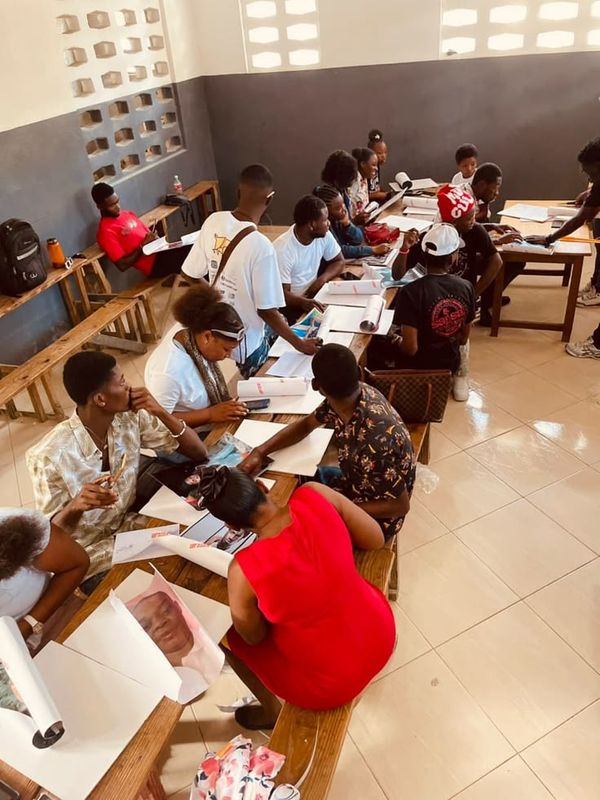
A contemporary church may need photographers, videographers, graphic designers, sound engineers, musicians, editors, livestream operators, social media managers and event teams. For young creatives, particularly those without easy access to formal creative institutions, volunteering in these environments can provide somewhere to practise those skills on real projects and in front of real audiences. Brief54’s initial research identifies this learn-by-doing function as an overlooked part of the ecosystem.
That experience does not have to remain inside the church.
Someone learning to operate a camera during weekly services is also learning production. A musician playing regularly develops performance experience. A designer producing event graphics builds a portfolio. A social media volunteer learns how to communicate with an existing community and respond to audience behaviour.
Those skills can later move into agencies, music, film, events and commercial production.
Seen this way, churches are not only commissioning creative work. In some cases, they are helping create the workforce that produces it.
Gospel is becoming an entertainment ecosystem
Music makes the commercial scale of this particularly visible.
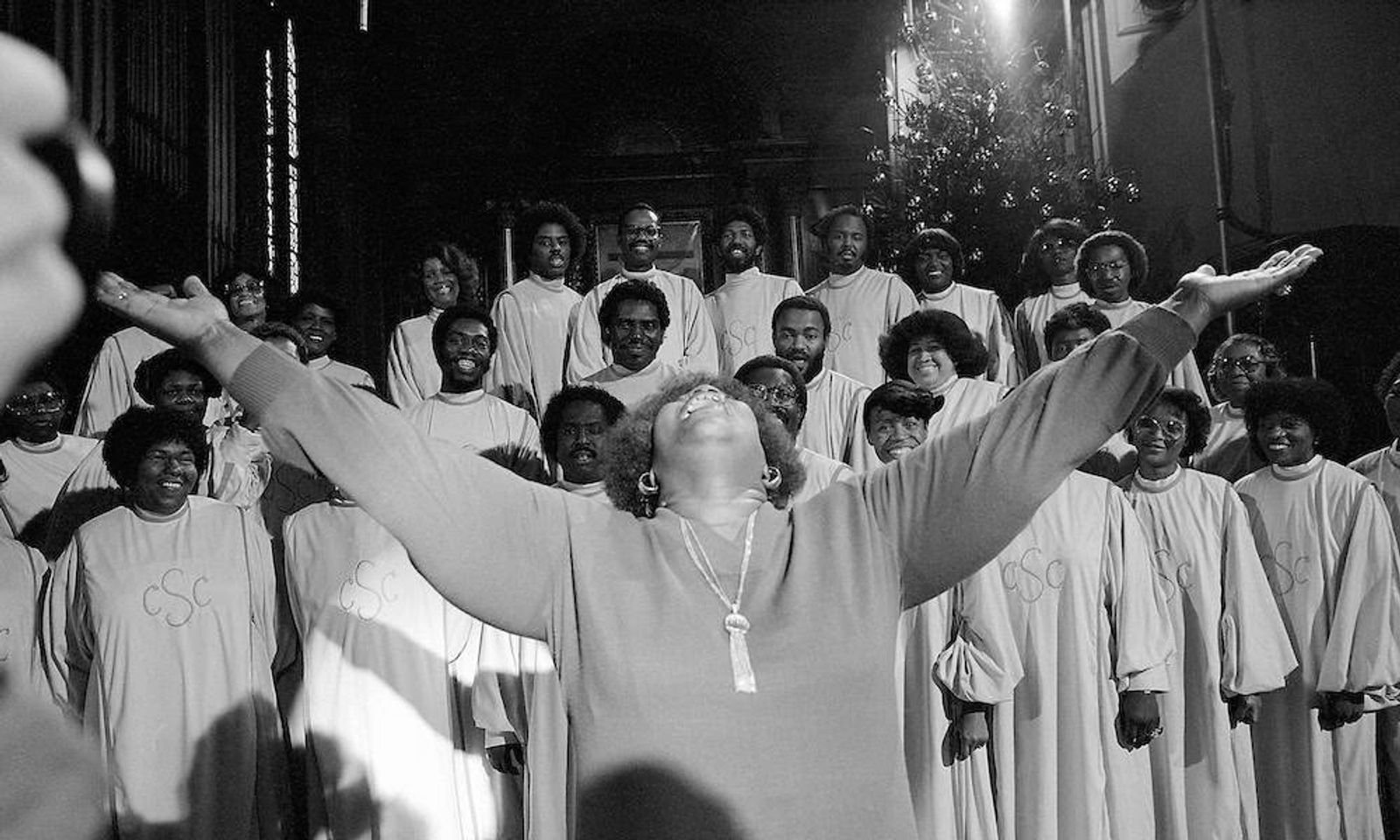
In Ghana, Joe Mettle’s annual Praise Reloaded has grown into a major live gospel event. Its 2024 edition drew thousands to the Accra Sports Stadium, while the 2026 edition returned to the venue with a wider programme of campus and church activations, media appearances, a music seminar and worship events leading up to the main gathering.
The significance is not simply that a gospel artist can fill a large venue. Around an event of that size sits a network of musicians, backing vocalists, producers, photographers, videographers, stage designers, sound engineers, promoters, venue operators and media partners. The original Brief54 research frames it as an economy of artists, producers, promoters, crews, venues and content.
Gospel itself is also increasingly significant within African digital music. Nigeria’s 2025 Digital Music Report identified gospel as maintaining a strong share of releases, supported partly by independent church and faith-based labels, while estimating major streaming growth for gospel and praise music between 2021 and 2025.
Faith therefore does not sit neatly outside entertainment. It can create the artists, audiences, live experiences and distribution channels around which entertainment businesses develop.
Some churches own the infrastructure too
The model becomes even more interesting when churches stop relying entirely on outside media platforms.
Christ Embassy, founded in Nigeria, operates LoveWorldSAT, a 24-hour television and online broadcasting network. According to the church, its satellite distribution reaches Africa and parts of Europe and Asia, while its South African operation includes three equipped broadcasting studios.
The Redeemed Christian Church of God offers another kind of scale. RCCG says it now has more than nine million members and 50,000 parishes across 197 countries and territories. Its official digital infrastructure includes livestreaming for major events alongside its physical network.
These are religious organisations, but viewed through a media lens, their structure is striking.
They have audiences. They produce recurring content. They own or operate distribution channels. They organise live experiences. They have physical networks through which information and culture move.
Audience, production and distribution can exist inside the same ecosystem.
That vertical integration is something media companies themselves spend considerable resources trying to achieve.
The opportunity is bigger than marketing to churchgoers
For Africa’s creative economy, the interesting question is therefore not simply how brands can advertise to religious audiences.
That would reduce a much larger ecosystem to another consumer segment.
The opportunity is in understanding what is being built around these communities.
For creatives, churches can provide skills, stages and audiences. For musicians and producers, gospel can create its own routes from local performance to recordings, streaming and large live events. For production and technology companies, increasingly sophisticated broadcasts and gatherings create demand for equipment, software and technical expertise.
Brands have opportunities too, but relevance matters. Faith communities are built around trust, identity and shared values. Treating them simply as large captive audiences risks misunderstanding precisely what made those audiences powerful in the first place.
The more useful lesson may be structural.
Much of the media industry is currently trying to build communities rather than simply accumulate viewers. Creators want direct relationships with followers. Platforms want audiences to return regularly. Entertainment companies increasingly turn intellectual property into live experiences, merchandise and content across multiple formats.
Many African faith organisations have been doing versions of this for years.
Their primary purpose remains religious. But around that purpose, they have built systems through which music, stories, skills, technology and live experiences circulate at considerable scale.
For Africa’s creative economy, those systems deserve closer attention.
Some of the continent’s most interesting media infrastructure may already exist in places we have simply never thought to call media companies.
Sources :
SpeakRJ, “Pastor Jerry Eze YouTube Video Stats” SPEAKRJ Stats
Punch, “Jerry Eze leads thousands in prayer at Old Trafford” punchng.com
MyJoyOnline, “Praise Reloaded 2024: Joe proves his Mettle at Accra Sports Stadium” MyJoyOnline
MyJoyOnline, “Joe Mettle announces Praise Reloaded 2026 at Accra Sports Stadium” MyJoyOnline
InterSpace Distribution, “Nigeria Digital Music Report 2025” NDMR · InterSpace Distribution
LoveWorldSAT, “About Us” LoveworldSAT
RCCG, “The Official Website of the Redeemed Christian Church of God”