The business of the African Jersey
African football jerseys are becoming increasingly desirable cultural products. Once largely associated with matchday and fandom, they now move through fashion, music, streetwear and diaspora communities, carrying African identities far beyond the stadium.

Ghana’s 2026 World Cup jersey is the latest example, weaving references to Ghanaian identity throughout its design. The home shirt places the Black Star at its centre, surrounded by geometric patterns, while the away shirt draws from Kente and the energy of Accra’s Makola Market. Through their partnership with PUMA, the national shirt has become a space for cultural storytelling.
As African football jerseys gain appeal beyond the sport, they also create a wider commercial ecosystem around fashion, lifestyle, licensing and collaborations. From replica shirts and lifestyle collections to collaborations, licensing and fashion, the jersey is reaching audiences far beyond traditional football supporters.
African culture increasingly gives these products their global appeal, while much of the resulting commercial value is captured elsewhere. The next opportunity is therefore not only to make better jerseys or involve more African designers but for African businesses to build a stronger presence across the growing economy surrounding the African jersey.
When culture creates demand
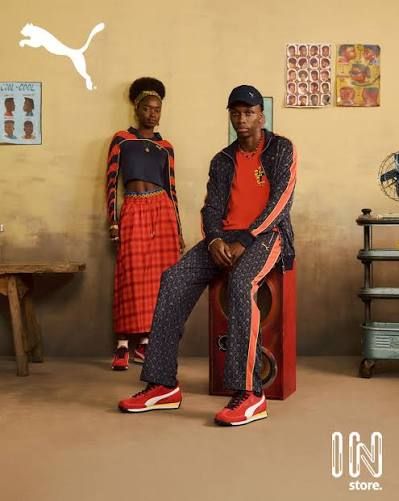
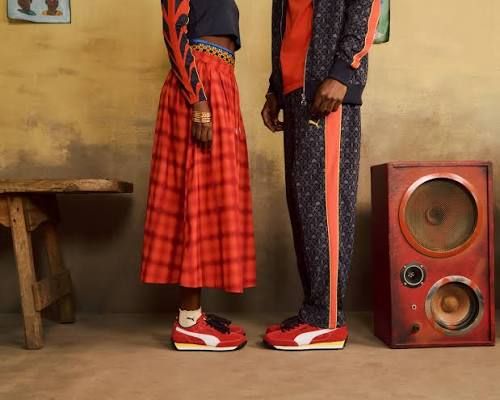
On February 1, 2025 PUMA launched the “Road to Unity” collection with the aim of homaging Ghana’s football culture. The collection offers bold prints, patterns, and colours inspired by the red and gold of the Ghanaian flag, with designs created for both men and women. It includes a reworked T7 tracksuit, a cropped long-sleeve top with a jersey-inspired collar, alongside graphic T-shirts and caps that carry the collection’s visual identity. For footwear, the collection centres on a special-edition Easy Rider, featuring a bold red upper with yellow detailing along the midsole. This partnership clearly resonated beyond the pitch, making the jersey much bigger than the team it represents.
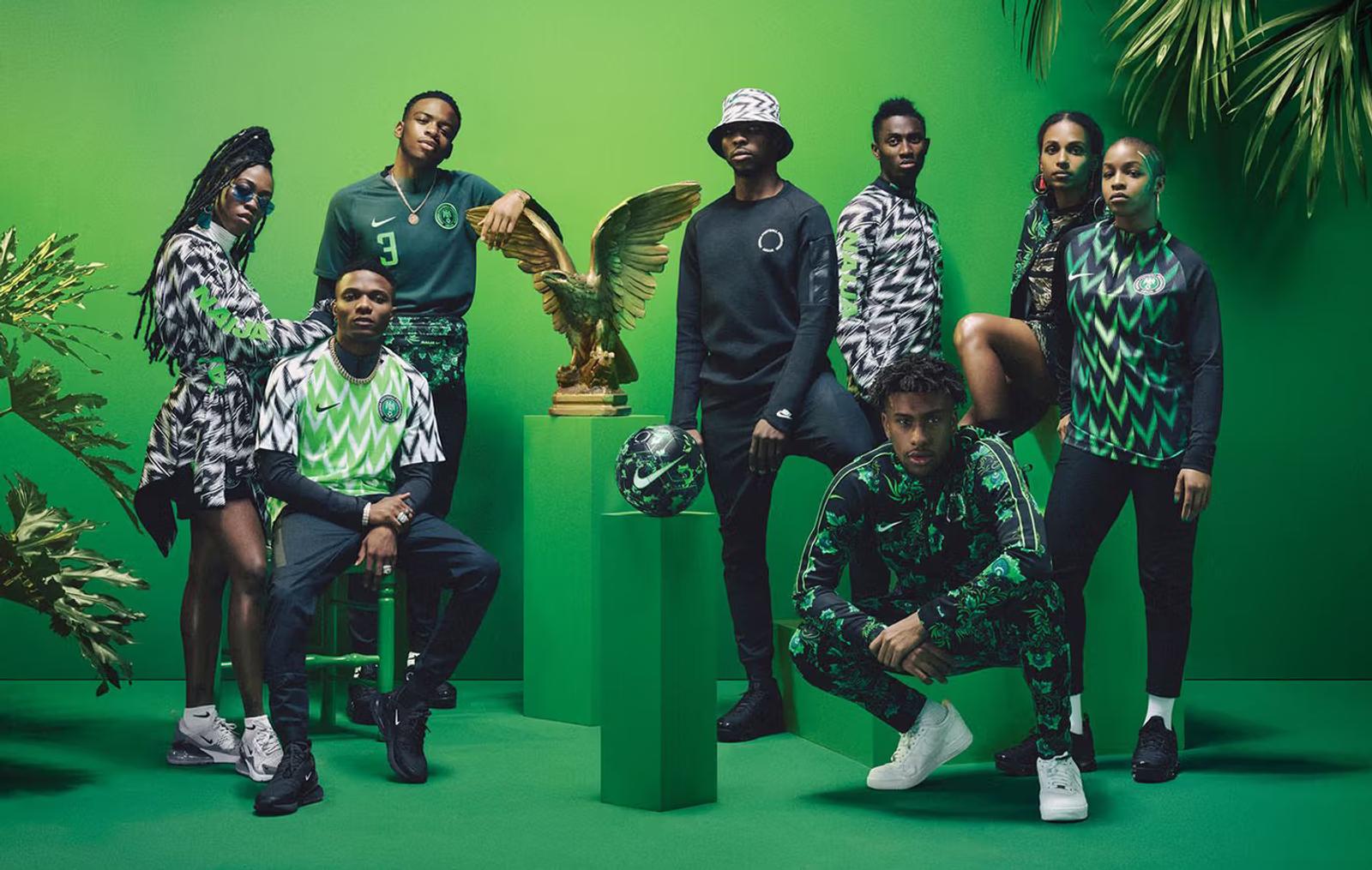
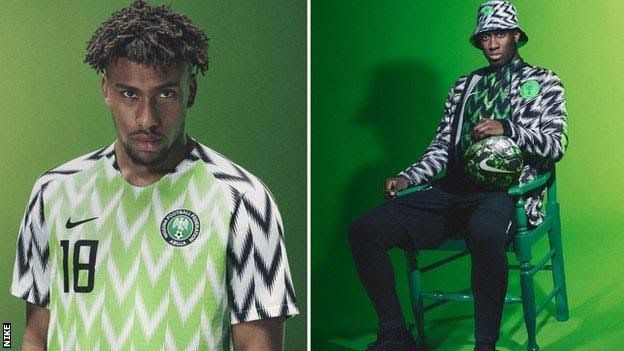
Nike also offered a clear example of the value of marketing a football jersey, in 2018 by partnering with Nigeria for their national team’s top. The Super Eagles collection was inspired partly by the country’s 1994 shirt showcasing a green zigzag that escaped the traditional boundaries of football merchandise. According to the Nigerian Football Federation, the shirt attracted around three million pre-orders, with queues that formed outside Nike’s London flagship and stock disappearing shortly after release. Much like with Ghana and PUMA, the collection also stretched beyond the match shirt into jackets, tracksuits and bucket hats, building an entire lifestyle proposition around being “Naija”.
The appeal came from more than football and the collection arrived at a moment when Nigerian music, fashion and popular culture were becoming increasingly visible internationally. Thus the jersey became another expression of that cultural confidence, something supporters could wear to represent the national team, but also something people wanted because of what Nigeria itself represented.
Commercially, this is an interesting distinction because football shirts have traditionally been sold to a fairly obvious consumer: the football supporter. Once the jersey becomes a cultural product, however, this collection exemplifies how the potential audience can stretch far beyond the sport by becoming increasingly valuable because of what can be built around it.
Who captures that value?
This is where the African jersey presents an interesting contradiction.
Much of the cultural material comes from African markets. The symbols are local. The histories are local. The supporters and communities giving those symbols meaning are local whereas much of the infrastructure turning that identity into internationally sold products sits elsewhere.
Whilst some African companies are already participating in the sportswear economy, they aren’t visible on an equal scale. In Ghana, Mayniak Sportswear was founded to offer a domestic alternative to international kit suppliers. Based in Accra, the company began by supplying Liberty Professionals and has since worked across Ghanaian football. Founder Abdul Rashid Zakari has spoken about creating jerseys that reflect the histories and identities of the clubs and communities wearing them.
Elsewhere, Tanzania’s Sandaland supplied the national team at the 2025 Africa Cup of Nations, while Burkina Faso has previously competed at AFCON in shirts produced by local sportswear company Tovio. Nigeria’s AFA Sports also supplied apparel for the country’s Tokyo Olympic delegation, with production taking place in Lagos.
More recently, Mali moved further in this direction. In 2026, the country’s football federation appointed Malian company WA Team Sport as the official supplier of its national teams through 2030.
Although these businesses show that African sportswear businesses aren’t absent, in most cases, they do not have the reach enjoyed by the companies dominating its most valuable properties. The issue is less about African participation and more about how that participation can scale.
Why the global brands still matter
There are practical reasons federations continue to work with companies such as PUMA, Nike and Adidas. Producing a World Cup jersey requires much more than good design. Suppliers need manufacturing capacity, international distribution, retail relationships, marketing budgets and the ability to meet demand across several markets at once. A Ghana supporter in Accra may want the same shirt at the same moment as someone in London, Toronto or New York and global sportswear companies already have systems capable of reaching both.
They also bring sponsorship money and marketing visibility that smaller companies may struggle to provide. Simply replacing international suppliers with African ones would not necessarily solve the problem and a more interesting opportunity may lie in looking at the entire value chain and asking where African businesses could play a larger role. Manufacturing is one part. Design is another. Then come licensing, merchandising, distribution, lifestyle products, retail, creative direction and collaborations.
Ghana has already offered a glimpse of this more layered approach in their partnership with PUMA who worked with Ghanaian creatives Jefferson Osei and Daniel Alum Jasper whilst creating the national teams jersey. Whilst this still leaves the company at the centre of the commercial relationship, it shows that participation does not have to begin with replacing the supplier altogether. There are several places to enter the business.
Beyond the kit
The growing relationship between football and fashion expands those possibilities even further. Nigerian-British designer Tega Akinola’s “Beyond the Game” collaboration with Kappa offers a useful example. Working with jerseys from clubs including Fiorentina, Real Valladolid and OGC Nice, Akinola reconstructs existing football shirts into dresses, jackets and other fashion pieces.
Here, a football jersey becomes raw material for another creative business.
The example sits slightly outside the national-team market, but that is precisely why it is interesting. It shows that the economic life of a football shirt does not necessarily end when it leaves the club shop. Designers, fashion brands and other creatives can reinterpret the cultural capital football has already created.
For African creatives, that opens opportunities beyond becoming official kit suppliers as football culture itself can become material for fashion, design, content and collaboration.
From cultural value to economic value
There is a temptation to make this conversation primarily about representation. More African designers. More African brands. More locally produced kits.
Those things do matter. But the bigger business opportunity lies in what happens after cultural relevance has already been created.
Nigeria demonstrated that an African football identity could generate extraordinary global attention around a jersey. Ghana shows how local symbolism can give a global sportswear product its distinctive character. Meanwhile, businesses across Ghana, Tanzania, Burkina Faso, Nigeria and Mali show that African companies already have some of the capabilities needed to participate in the industry.
The pieces exist. They are simply not yet connected at the scale of the opportunity.
That leaves an important question for federations, brands and creative businesses across the continent: how much of the economic value created by African football culture can eventually be built, owned and retained within African creative economies?
The answer does not have to be an African company manufacturing every national jersey.
It could be stronger licensing businesses. Better merchandising infrastructure. Local manufacturing partnerships. African-designed lifestyle collections. Federation collaborations with fashion brands. Better regional distribution. Or creative businesses built entirely around the culture surrounding football.
Because the most interesting thing about the African jersey today is not simply that it has become fashionable.
It is that African culture is already creating demand for it.
The next opportunity is building more of the businesses that capture that demand.
Sources :
BBC Sport, Nigeria 2018 World Cup kit
PUMA Media Hub, “PUMA’s ‘Road to Unity’ Collection Is an Homage to Ghana’s Vibrant Football Culture” PUMA Media Hub
Graphic Online, “Puma unveils bold Ghana 2026 World Cup kits inspired by Ananse and Makola” Graphic Online
Africanews, “Meet Rashid Zakari, Ghana’s youngest sportswear company CEO”
Football Fashion, “Tanzania AFCON 2025 Home, Away & Third Kits” FOOTBALL FASHION
Footpack, « CAN 2025 : tous les maillots, pays par pays » footpack.fr
AFA Sports, “Tokyo 2020 Afa Sports Becomes First African Sports Apparel Partner in Olympics History” afasports.com
Match Mali, « Équipes nationales du Mali : WA Team Sport habillera les Aigles jusqu’en 2030 » matchmali.ml
PUMA Media Hub, “PUMA Unveils Their New African National Team Home & Away Kits Celebrating the Essence of African Culture” PUMA Media Hub
Kappa, “Beyond the Game: Jersey Customization Project” Kappa